



Fact Check Team: Why Greenland? Exploring the basis for Trump's ambition
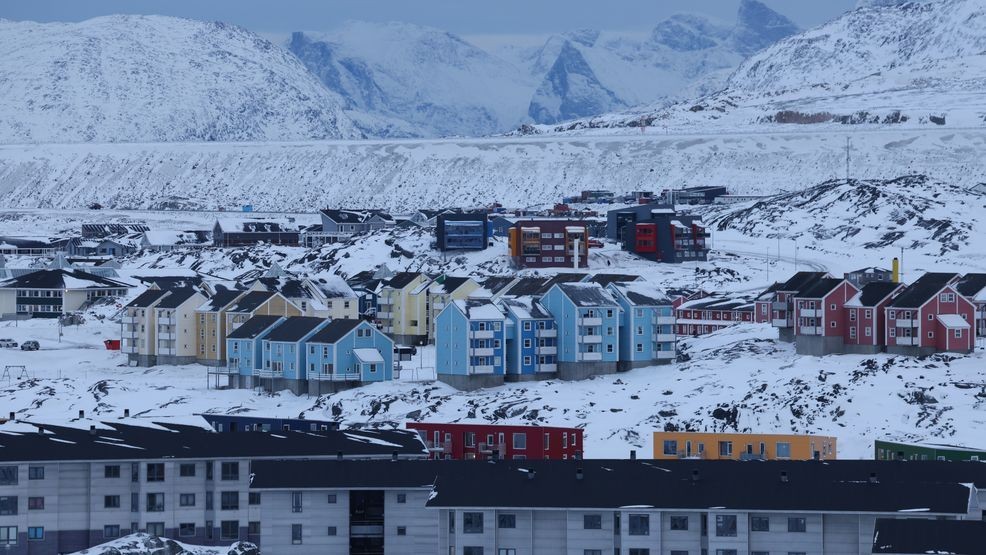

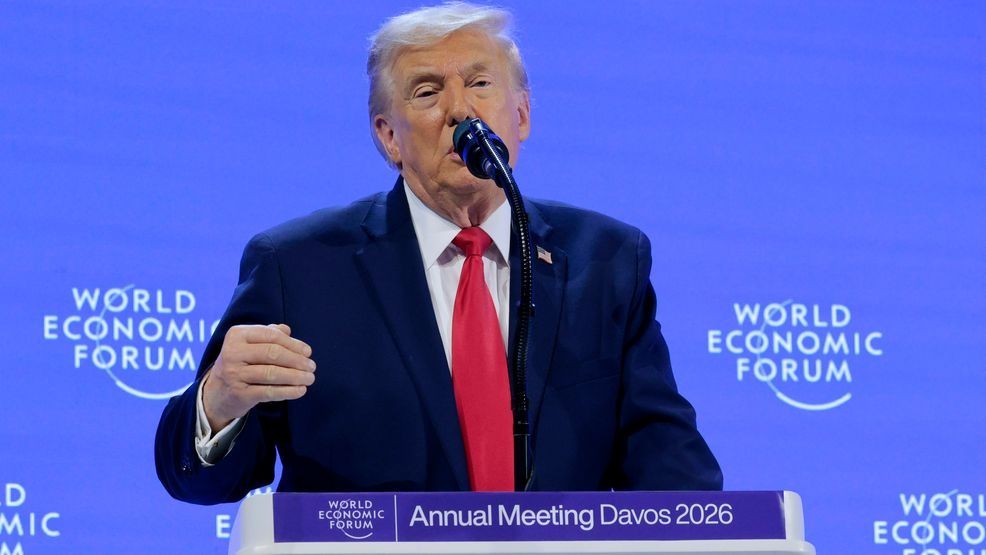
WASHINGTON (TNND) — The Trump administration has made it clear it sees acquiring Greenland as more than just an ambitious long-term goal; it’s being framed as a strategic necessity.
So the question is simple: why Greenland? And if the U.S. were actually to try to take it by force, what would that do to NATO?
The draw: power, geography, resources, and the Arctic getting hotter (politically and literally)
When you zoom out, Greenland checks almost every box that matters in modern power competition: military positioning, global shipping routes, and critical minerals; all in a region that is becoming more strategically valuable every year.
The Council on Foreign Relations points out that Greenland sits between Europe and North America, and because it’s close to both the Arctic and North Atlantic Oceans, it has major military and defense value, especially when it comes to tracking growing Russian and Chinese activity in the region.
And as Arctic conditions change, the stakes get higher.
With ice melting and more shipping lanes gradually becoming possible, Greenland’s location becomes even more valuable for both trade and naval strategy, meaning whoever has influence there gains leverage over what may become key Arctic corridors.
That’s why Greenland keeps coming up in the same conversation as Russia and China: the Arctic is no longer a quiet corner of the map.
The rare earth factor: big reserves, huge potential, but not yet mined
Greenland also fits into one of the biggest economic and defense questions facing the U.S. right now: supply chain dependence, especially for materials needed in advanced technology and national security systems.
According to the Center for Strategic and International Studies (CSIS), Greenland ranks eighth in the world for rare earth reserves, estimated at 1.5 million tons, and the island includes two rare earth deposits that are among the largest in the world: Kvanefjeld and Tanbreez. CSIS also notes an important reality check here: no rare earth mining has taken place on the island yet.
So yes, Greenland has the potential to matter enormously in the global rare earth race.
But “potential” isn’t the same thing as production, and turning underground resources into real supply chains is a long, complicated process. Still, from Washington’s perspective, the strategic logic is obvious: rare earths = defense tech + industrial strength, and the more access the U.S. has outside rival influence, the better.
But here’s the problem: Greenland is tied to Denmark, and Denmark is NATO
That means any serious move to seize Greenland, especially by force, wouldn’t just be controversial. It could blow up alliance unity.
A Just Security analysis argues that if the U.S. attempted to take Greenland militarily, it would amount to an attack on Denmark, and through NATO’s collective defense system, would raise the question of how the alliance handles a scenario where the U.S. is the aggressor.
That’s the kind of situation NATO simply wasn’t built for.
Because NATO’s entire backbone is Article 5, the idea that an attack on one member is treated as an attack on all. NATO describes Article 5 as the foundation of collective defense. A scenario where the United States is on the other side of that equation would be unprecedented.
So what would the U.S. gain that it doesn’t already have?
This is where things get even more complicated, because the United States already has significant access in Greenland through existing agreements with Denmark. The U.S. and Denmark are bound by defense arrangements concerning Greenland, including agreements covering U.S. defense activities and access. So if the U.S. already has a major foothold there, why push for more?
The core argument is this: access isn’t the same thing as ownership. Even with deep military cooperation, the U.S. does not fully control Greenland’s:
- land decisions
- legal system
- resource development
- long-term political future
Another argument people raise is: “Greenland already relies heavily on the U.S. for defense.”
And that’s not totally wrong. If Greenland were attacked by a foreign power, it would be treated as an attack on Denmark, meaning NATO would respond under its collective defense framework. And the U.S. already has a major operational role in Greenland through longstanding defense cooperation with Denmark.
But here’s the key point: NATO doesn’t automatically force the U.S. to do everything alone.
Article 5 doesn’t require a preset troop number or a specific military response; it says each ally takes action it “deems necessary,” which can include the use of force. So yes, the U.S. would likely be a leading defender, but not the only one.