



Consumer confidence sinks to lowest level in over a decade: The Conference Board
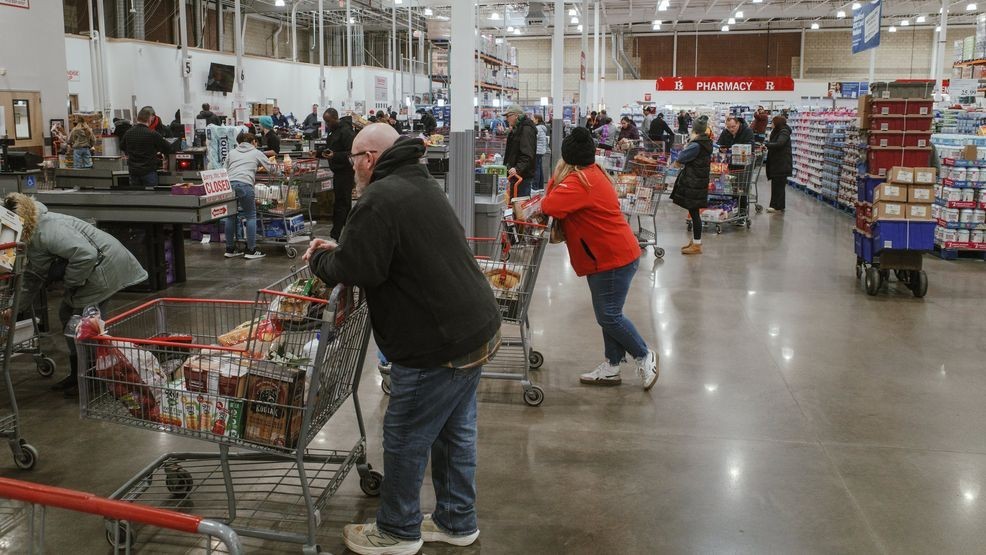
(TNND) — Consumer confidence has collapsed to its lowest point in nearly 12 years, according to new surveys from The Conference Board.
The nonpartisan, nonprofit think tank and business membership organization released the January update for its consumer confidence index, which registered a reading of 84.5.
That was a nearly 10-point drop from an upwardly revised December and the lowest mark since May 2014.
Consumer pessimism in January surpassed the lows of the early pandemic.
And all five components of the index fell, including those that measure both present-day and forward-looking economic feelings.
Consumer confidence dipped this month across age groups, income brackets and political affiliations.
Write-in responses on The Conference Board’s January surveys skewed negative and focused on price concerns for everyday items, though Chief Economist Dana Peterson said consumers might’ve been shaken a bit by national and world events to begin the year, such as those happening in Venezuela, Greenland and Minnesota.
Mentions of tariffs and trade, politics, and the labor market rose in January.
References to health, insurance and war edged higher, Peterson said.
“There's all manner of things that could have soured the mood in January,” she said.
Consumers’ mood has been on a decline for a year, hitting its 2025 peak last January.
“They're saying these things, and they feel this way. We haven't really seen a massive weakening in the economy. Why? Because most people are still working,” Peterson said.
Employed Americans are still spending, she said. But a growing number of people are viewing jobs as harder to come by in this low-hire, low-fire labor market.
“They think that it's very difficult to get a job, even though most people still are working,” Peterson said. “Those who do lose their jobs, they're having a tough time, because companies aren't hiring. They're just waiting to see what happens. So, it's just kind of a negative feedback loop.”
Last year saw the weakest job growth since 2020. And job growth decelerated hard after President Donald Trump’s tariffs announcement in April and has been down since, labor economist Aaron Sojourner previously said.
The Conference Board’s index isn’t alone in showing soft consumer confidence.
The University of Michigan’s long-running consumer sentiment index is down about 20% from a year ago, and Gallup’s Economic Confidence Index is at its lowest point since July 2024.
“Part of the story is that the traditional relationship between consumer confidence and the economy has really broken down the last five or six years, really ever since the pandemic,” said Bankrate Principal Analyst Ted Rossman.
Consumer confidence traditionally has foreshadowed how people spend, borrow and save, Rossman said. But that relationship has really weakened in recent years.
“We've seen depressed consumer sentiment ever since the pandemic, and yet the economy's been growing,” he said. “Much of this comes back to that K-shaped economy idea that we've talked a lot about, that the rich are getting richer, the poor are getting poorer.”
Rossman mentioned a Moody’s stat that the top 10% of earners account for about 50% of all spending.
Stock and home prices are high.
The unemployment rate is still fairly low by historical standards, even though it's gone up a bit lately.
Consumer spending has been humming right along, even as sentiment has lagged.
And the third-quarter gross domestic product, the latest measure of overall economic growth, was the strongest in a couple of years.
The annual rate of inflation has cooled significantly from its pandemic-era peak, but folks are feeling the weight of cumulative price hikes over the last five years. Prices are up about 25% over the last five years combined.
“So, the mood is gloomy, but yet the economy's been growing largely because upper-income households are powering it forward,” Rossman said.